"Can you also unload and load containers?"
New customers of Karl Michels GmbH & Co. KG ask this question regularly. The answer is a clear yes. And there is more behind it than one might initially expect: dedicated infrastructure, years of experience in container handling, and a central element that makes this service possible in the first place – the company's own loading docks.
What is container logistics and what does Michels have to do with it?
Container logistics refers to the entirety of all processes relating to the transport, handling, and storage of goods in standardised ISO containers. It is the backbone of global trade: around 80 to 90 percent of all goods traded worldwide are transported by sea – a large proportion of them in containers. (cf. German Environment Agency, https://www.uba.de/n3391de)
For Karl Michels GmbH & Co. KG, container logistics means specifically: the professional loading and unloading of containers directly at the company site in Meudt in the Westerwald. Michels does not handle the container transport by road or sea, but rather the decisive step in between – the transhipment: the goods arrive in the container, are professionally unloaded, stored, or prepared for onward transport. Or conversely: goods from the warehouse are loaded into containers and sent on their mostly international journey.
This is made possible by the company's strategically favourable location: via the nearby inland ports of Koblenz, Bendorf, and Andernach, there is access to the major overseas ports of Rotterdam and Antwerp – an ideal prerequisite for container handling in import and export business.
What is container transhipment?
The term container transhipment describes the process by which goods are transferred from one means of transport to another, or by which a container is loaded or unloaded. In the context of Michels, this means specifically:
- A container arrives by ship from Asia, Australia, or America at seaports such as Rotterdam, Antwerp, or Hamburg, where it is transhipped onto an inland vessel or loaded onto a truck
- The container then arrives, for example by inland vessel, at a nearby port
- It is transported by truck to the Michels site in Meudt
- There, unloading takes place via the loading dock – the goods are palletised, stored, or prepared directly for onward transport
- Or conversely: finished goods from warehouses 1 and 2 are loaded into the container via the dock – for example for export to India
Container transhipment is thus the link between global sea freight traffic and regional warehouse and distribution logistics. And this is precisely where Michels' strength lies.
Container unloading: why a loading dock makes the difference
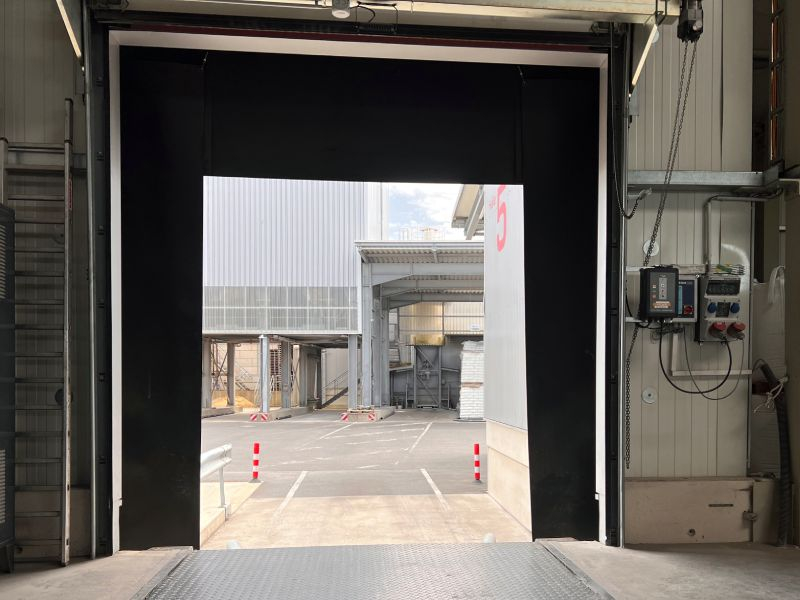
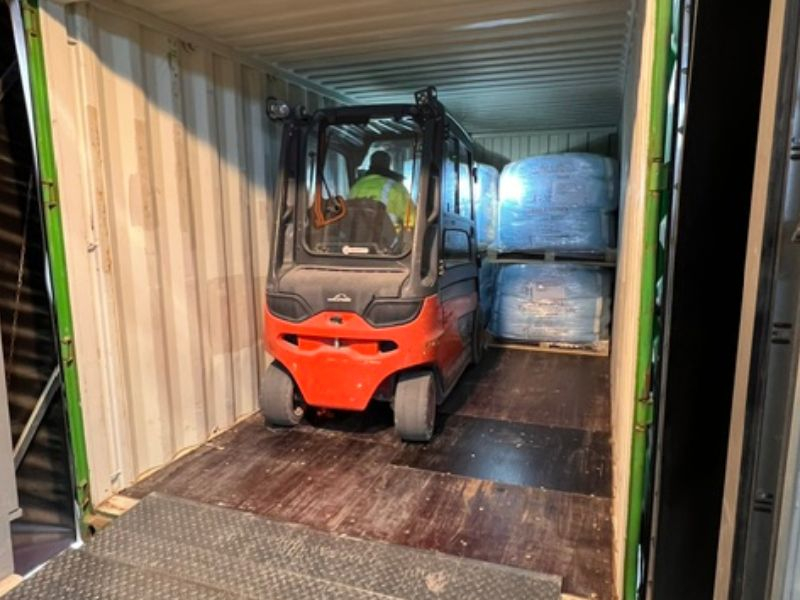
Karl Michels GmbH & Co. KG has two dedicated loading docks at warehouses 4 and 5. These docks allow a forklift to drive directly into the container at ground level – without any height difference, without loss of time, and without safety risk.
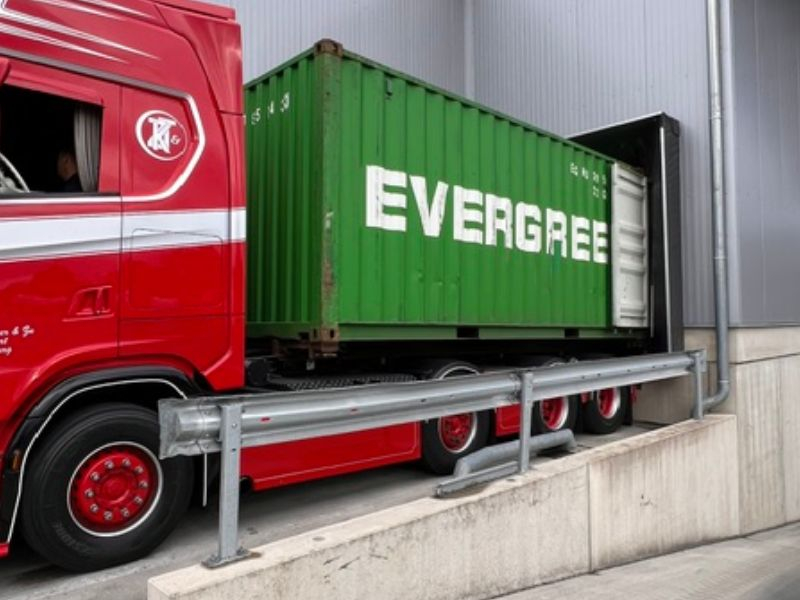
While a tautliner allows lateral loading and unloading by forklift, a sea freight container is only accessible from the rear. In practice, this means: without a loading dock that compensates for the height difference between the container floor and the warehouse floor level, efficient unloading with industrial trucks is not possible. This is precisely where the container dock comes into play.
This sounds simple, but in practice it is a considerable competitive advantage: many freight forwarders and logistics service providers do not have this infrastructure. Anyone wishing to load or unload containers without a dock is dependent on labour-intensive manual work or external service providers.
The result: fast throughput times, low error rates, and safe handling of even heavy or bulky goods.
Sea freight forwarding: Michels as the interface between port and warehouse
The connection between sea freight traffic and regional logistics is no coincidence, but the result of decades of experience and a deliberate location strategy. The nearby ports are for Michels not merely a geographical given, but a strategic component of the service offering.
Import logistics from Asia, export logistics to India, interim storage, order picking, onward transport – Michels handles the entire landside of the sea freight process. This makes the company a reliable partner for businesses that want to organise international supply chains efficiently without having to invest in complex warehouse and handling infrastructure themselves.
FAQ – Frequently Asked Questions about Container Unloading and Loading at Michels
What is the difference between a tautliner and a sea freight container when unloading?
A tautliner (curtainsider trailer) can be loaded and unloaded from the side – the forklift approaches from the side. A sea freight container is a closed steel box that is only accessible from the rear. Without a loading dock that compensates for the height difference between the container floor and the warehouse floor, efficient unloading with a forklift is not possible.
What is container transhipment?
Container transhipment refers to the process by which goods are unloaded from a container or loaded into a container – as the interface between sea freight traffic and warehouse or distribution logistics. At Michels, this transhipment takes place via two dedicated loading docks at warehouses 4 and 5.
How do you load a container correctly?
Professional container loading begins with the right planning: weight distribution, cargo securing, and the sequence of pallets are decisive for safe transport. At Michels, experienced staff handle the entire loading process – including professional securing of the goods for the long sea voyage. The loading dock enables the forklift to drive directly into the container at ground level.
Does Michels also offer container transport?
No – Michels specialises in the loading and unloading of containers as well as the subsequent storage and redistribution of goods. The actual container transport (e.g. by truck from the port to the warehouse) is coordinated by Michels in cooperation with partners. The focus is on transhipment and warehouse logistics at the Meudt site.
Which industries is container transhipment at Michels relevant for?
The service is particularly interesting for companies that import goods from Asia or export to markets such as India – and need a reliable logistics partner on the landside. In the context of container transhipment, Michels specialises in packaged goods on pallets – in addition, the company also offers cross-industry solutions for loose bulk goods.
For all questions, the team of
Karl Michels GmbH & Co. KG is at your disposal.