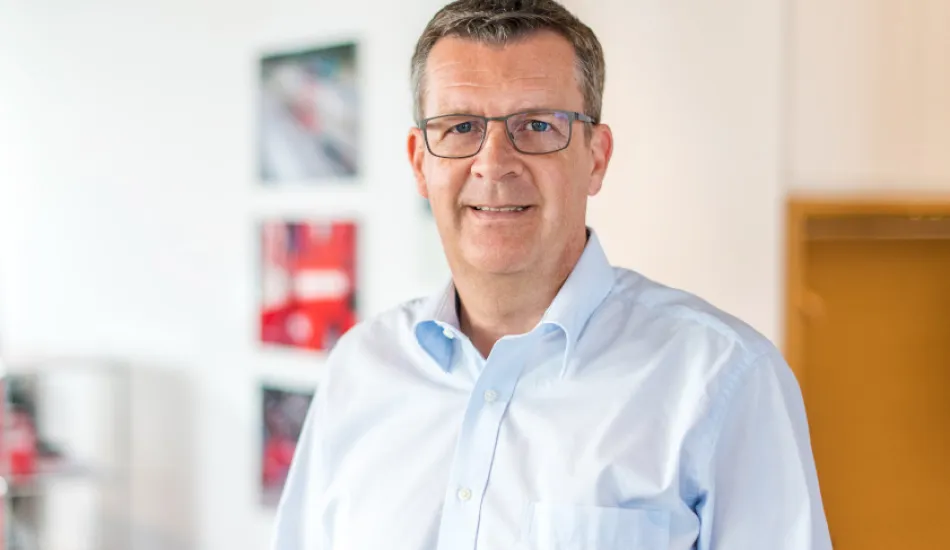
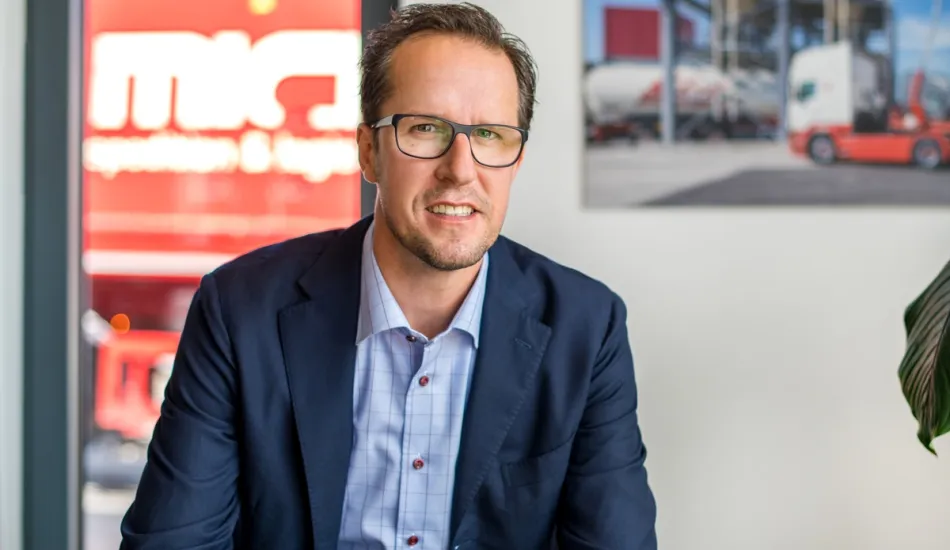
Logistics services are more than the pure transport from A to B. What is really behind it and how does one develop from a classic transport company into a modern logistics service provider? Peter P. Stöcker (Management) and Sebastian Kloft (Managing Director) of Karl Michels GmbH & Co. KG give insight. The company from the Westerwald looks back on over 85 years of history and has undergone a remarkable transformation in that time.
What is meant by a logistics service provider?
Peter P. Stöcker: A logistics service provider accompanies the customer not only in pure transport, but along the entire value chain around the goods. That starts with transport, moves through storage, and ends perhaps with silo transfer, with decanting – depending on what the customer needs. What is important: you do not think in individual services, but in customer problems.
Sebastian Kloft: And the decisive thing is that you can actually provide these services yourself, not just arrange them. For that you need the infrastructure. The fleet. The warehouses. The facilities. That is the difference.
What does a logistics service provider like Michels do?
Sebastian Kloft: The foundation of everything is the company's own fleet. Over 100 vehicles, including tipper semi-trailers, silo vehicles, walking-floor trailers, and tautliners. Without this fleet, the business would not work the way it does. On this basis, Michels can transport, but also store, transfer to silo, tranship, and so on.
Peter P. Stöcker: Let us take silo ensiling as an example. Silo ensiling is much more than just filling – and it only works if you also have your own silo trailers. Anyone who does not have their own silo fleet simply cannot offer this service. On the premises in Meudt there is a stationary silo system with six silos and a total volume of 760 m³. It came about because demand required it.
Sebastian Kloft: A customer comes and says: "I need storage space and can you also do silo ensiling?" Perfect, we do that. Then he says: "Can you deliver it afterwards to a specific location?" Yes. "Can you load a container and deliver it towards the Rhine port?" Yes. That is what makes Michels: thinking and delivering horizontally.
What distinguishes a logistics service provider from a classic freight forwarder?
Peter P. Stöcker: Michels provides the logistics service from a single source – with its own fleet, its own warehouses, its own stationary silo system, its own workshop, its own cleaning facility. That gives a completely different level of control over quality, reliability, and flexibility.
Sebastian Kloft: The other major difference is the depth of the offering. A classic freight forwarder drives from A to B. Michels can transport the goods from A to B, store them, tranship them, process them further, and then take them to C. That is a different dimension – and it creates real added value for customers, because they do not have to coordinate five different service providers.
How did a freight forwarder become a logistics service provider?
Sebastian Kloft: (laughs) Grandpa bought himself a tipper. That is the origin. In 1937, in Meudt, Karl Michels started as a self-driving entrepreneur – with a small truck, transporting clay from the local clay pits to the railway loading station. Back then there were many clay pits here in the Westerwald, and the clay had to get to tile and ceramics manufacturers throughout Germany, for example.
Peter P. Stöcker: Then the first requirements came from the market. You drive tippers – fine. But can you also drive silos? We can. So at some point a silo came along. And then the next enquiry comes: can you also transfer from tipper into silo trailer? And from silo trailer back into tipper? And suddenly a service portfolio emerges that builds up around the original transport service.
Sebastian Kloft: That is the decisive thing: Michels never sat down strategically and said "We are now going to become a logistics service provider." This transformation emerged from real market demand. From the requirements of customers. From the first warehouse to the first silo ensiling order – there were over twenty years in between. These are grown structures.
Peter P. Stöcker: The fleet is the same. Over 100 vehicles – that is over seventy years of growth. You do not simply buy a hundred vehicles overnight. It grows with the business, just as the staff does.
I am looking for a logistics service provider with transport and storage – what does Michels offer?
Sebastian Kloft: The combination of transport and storage is one of the strongest points. On our premises in Meudt there are several warehouse halls, a stationary silo system with six silos and a total volume of 760 m³, a bulk goods hall, a big bag filling station, and a transhipment station – all on one site, all from a single source. A customer who has their goods delivered, stored on an interim basis, and then redistributed gets all of that at Michels as a complete package.
Peter P. Stöcker: And because the company's own fleet is available, it is not a black box. You know when which vehicle is available, you can react flexibly, and the entire chain is managed in-house.
Logistics service provider for Europe: how far does the network reach?
Sebastian Kloft: Meudt is strategically very well situated – close to Cologne and Frankfurt, with direct access to the A3 and indirect connections to the A5, A48, and A61. The inland ports of Bendorf, Koblenz, and Andernach are quickly accessible, as are international hubs such as Rotterdam and Antwerp. Michels has been operating throughout Europe for decades – this began as early as the mid-1960s with long-distance transport.
Peter P. Stöcker: Michels is no longer the local freight forwarder today. Thinking and delivering happens throughout Europe – but with the advantage of the medium-sized service provider: direct contact, clear points of contact, no anonymous call centres.
Conclusion: logistics services emerge from real customer requirements
What the history of Karl Michels GmbH & Co. KG impressively shows: you do not become a logistics service provider through self-definition, but through consistently thinking alongside the customer. The combination of a company's own fleet, warehouse infrastructure, silo ensiling facilities, and decades of experience in specific goods categories makes the difference.
Anyone looking for a logistics service provider for road transport, storage, and industrial goods in Europe will find in Michels a partner who does not arrange these services, but provides them directly. For over 85 years. From the Westerwald. For all of Europe.
➜ Are you looking for a logistics service provider with transport and storage from a single source?
Submit a non-binding enquiry now.
For all questions, the team of
Karl Michels GmbH & Co. KG is at your disposal.